

Iniochos 2025 - Andravida, Greece
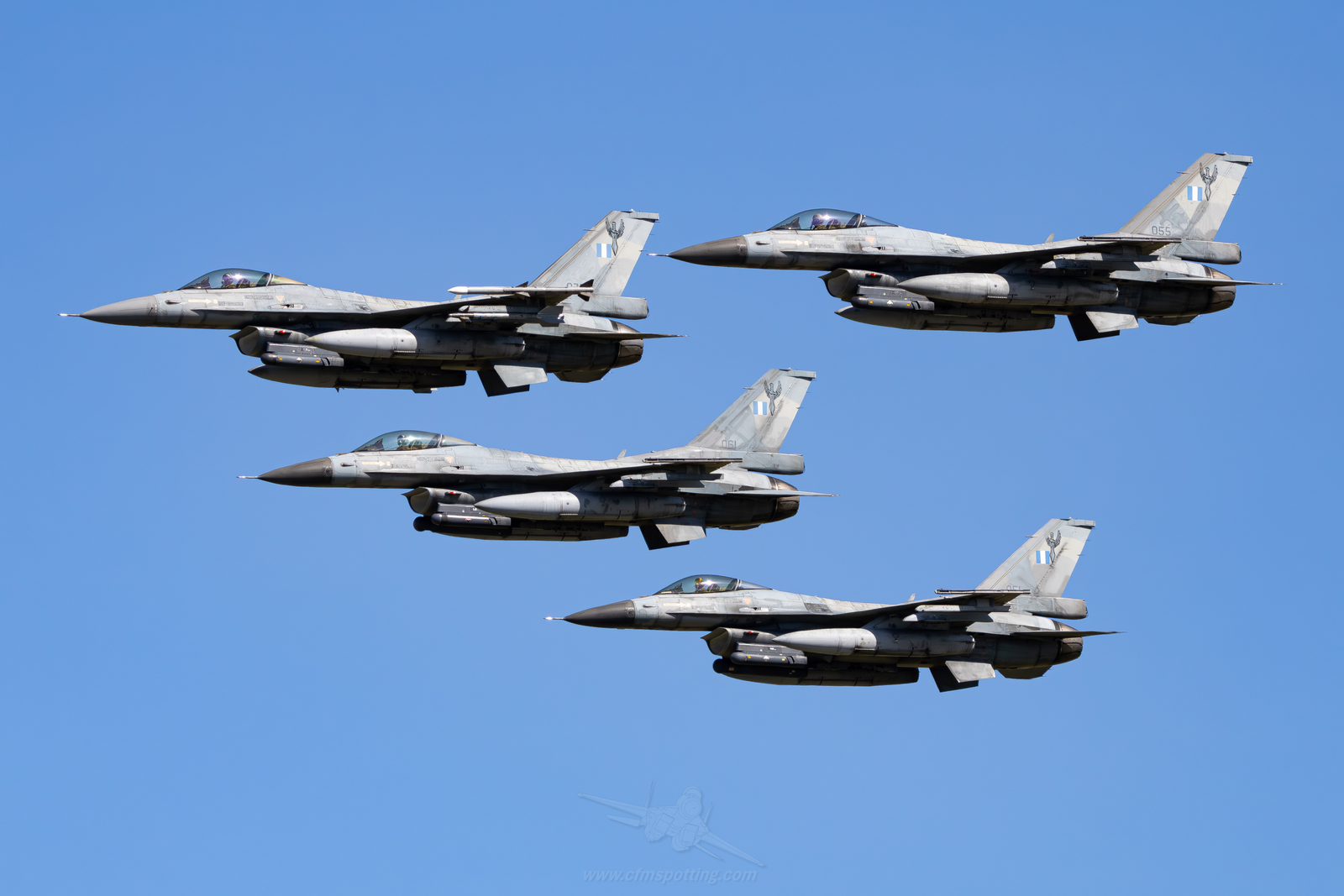
As every year, one of the largest European exercises, Iniochos, took place at the Andravida Air Base in the heart of the Peloponnese. This year, it was held from March 31st to April 13th.
The History of Iniochos
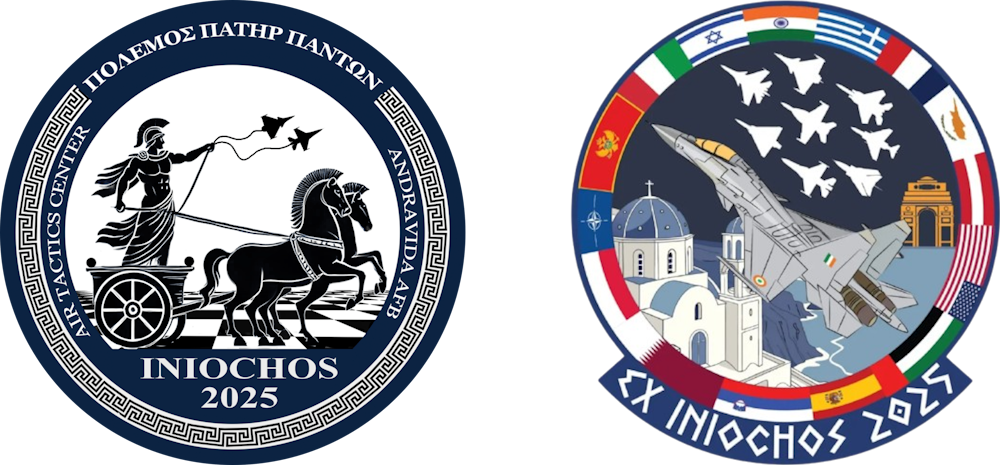
The name Iniochos comes from the ancient Greek word ἡνίοχος, meaning “charioteer”—the one who drives the chariot—a powerful metaphor indicating control, leadership, and mastery of the platform in a complex context like aerial combat.
The exercise was born in the late 1980s as an internal training event of the HAF (Hellenic Air Force), designed to enhance the operational readiness of Greek squadrons and to simulate realistic, high-intensity conflict scenarios.
At the time, Greece was already a NATO member, but operational theatres were still largely national. The exercise was conducted in a decentralized manner, with each squadron operating from its own base, while the command and control centre was located at the Fighter Weapons School (FWS) in Larissa.
The goal was to create an environment simulating the pace and pressure of real war, combining offensive and defensive operations, ground attacks, air superiority, and reconnaissance missions.
In 1998, the exercise underwent a major transformation: detailed mission evaluations were introduced, along with the use of early digital analysis and debriefing tools. This marked the shift from a purely operational exercise to a structured training program, with a growing emphasis on planning quality and performance evaluation for both pilots and support teams.
Around 2005, the transition toward the Single Base Concept began to take shape: the need for more integrated and realistic training led the HAF to increasingly concentrate activities at Andravida Air Base in the Peloponnese, home of the Air Tactics Center.
In 2013, Iniochos officially adopted the Single Base Concept. This meant all participating air assets would operate from the same base—Andravida—just like in a real multinational operation.
This radical change made it possible to:
- Increase the complexity of missions;
- Strengthen joint-force communication;
- Simulate realistic conditions (heavy air traffic, congestion, limited resource management);
- Optimize the joint planning process.
In 2015, a milestone was reached: Iniochos opened to international participation and was officially designated as an INVITEX (Invitation Exercise).
The first guest nations were the United States, with their F-16Cs from Aviano Air Base (31st FW), and Israel, with a reconnaissance and surveillance aircraft. From that point on, the scale of the exercise expanded exponentially each year.
Some of the key principles of the new format include:
- NATO and non-NATO partner interoperability;
- Multi-domain simulation (air-land-sea);
- Evaluation using onboard sensors and advanced debriefing systems;
- High-intensity scenarios conducted daily and at night.
Between 2017 and 2023, Iniochos solidified its reputation as one of Europe’s premier air exercises. Participating countries included:
- United States (F-15E, F-16, KC-135, MQ-9);
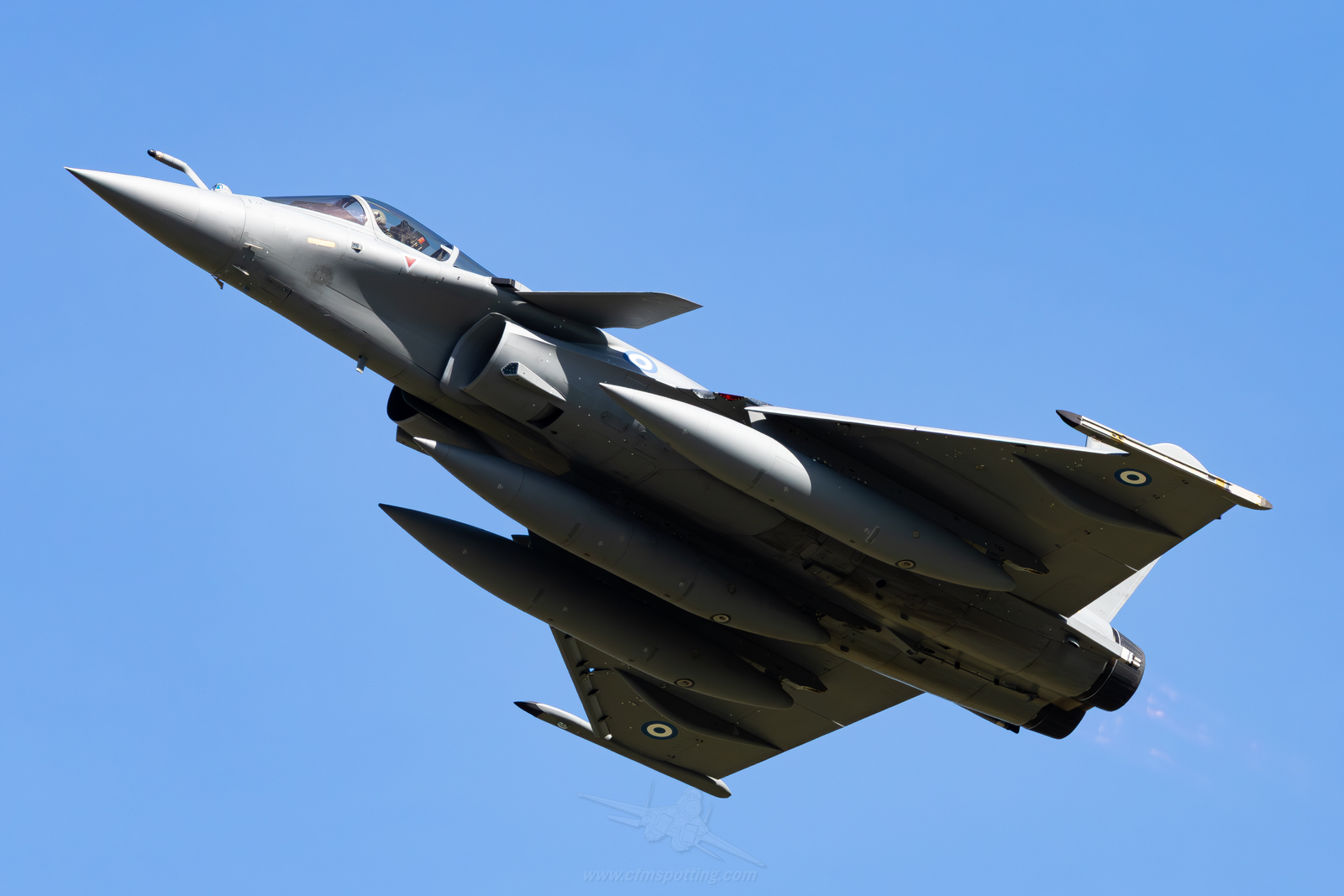
- France (Rafale, Mirage 2000);
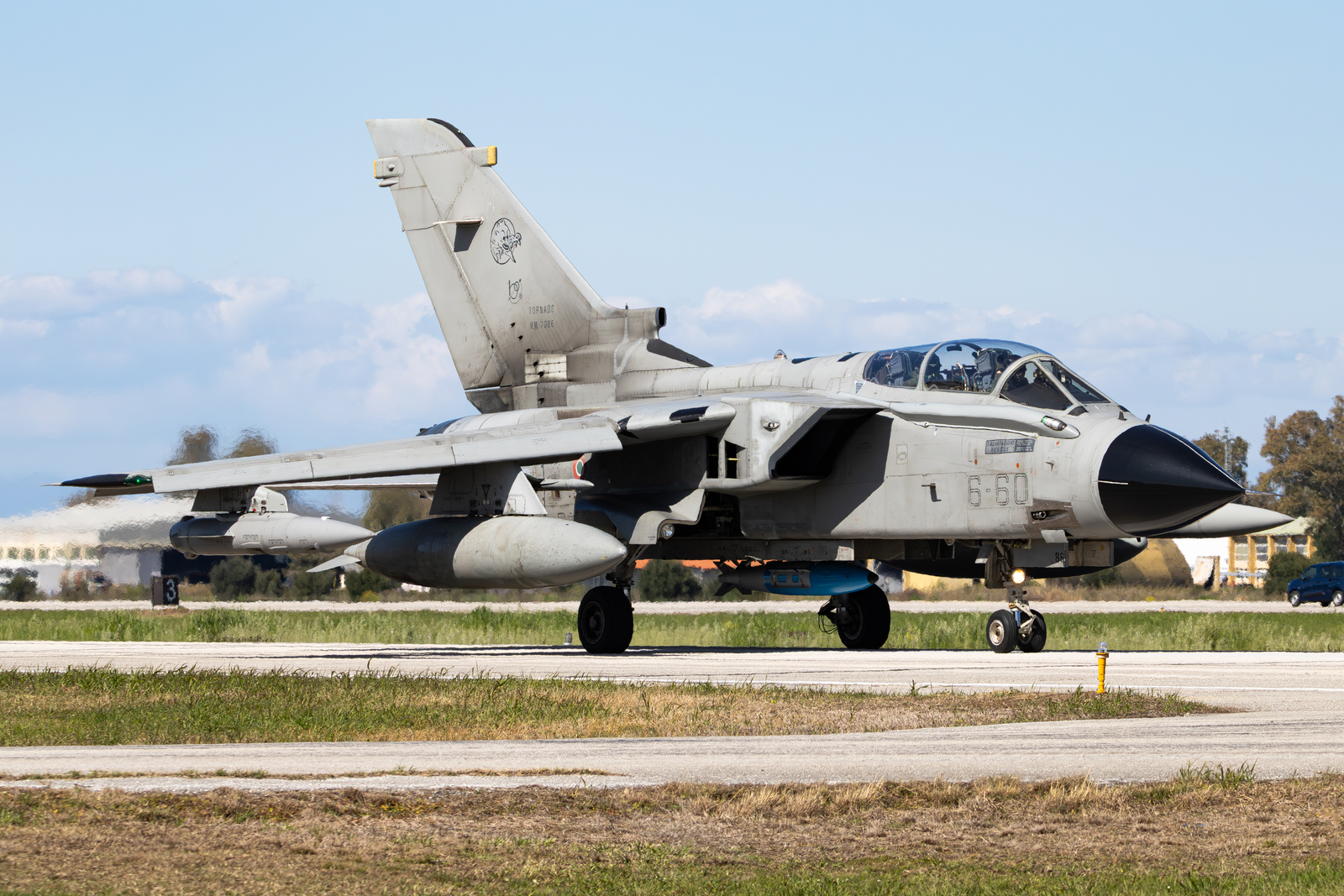
- Italy (Tornado, AMX, Typhoon);
- United Arab Emirates, Israel, United Kingdom, Spain, Cyprus, Egypt, and others.
The exercise became more than just “training”—it turned into an operational laboratory where real-time testing is conducted for:
- SEAD/DEAD tactics (Suppression/Destruction of Enemy Air Defences);
- Combined attacks on multiple targets;
- COMAO missions;
- Integrated air defense;
- Close Air Support (CAS) in coordination with JTACs on the ground;
- CSAR scenarios in hostile environments.
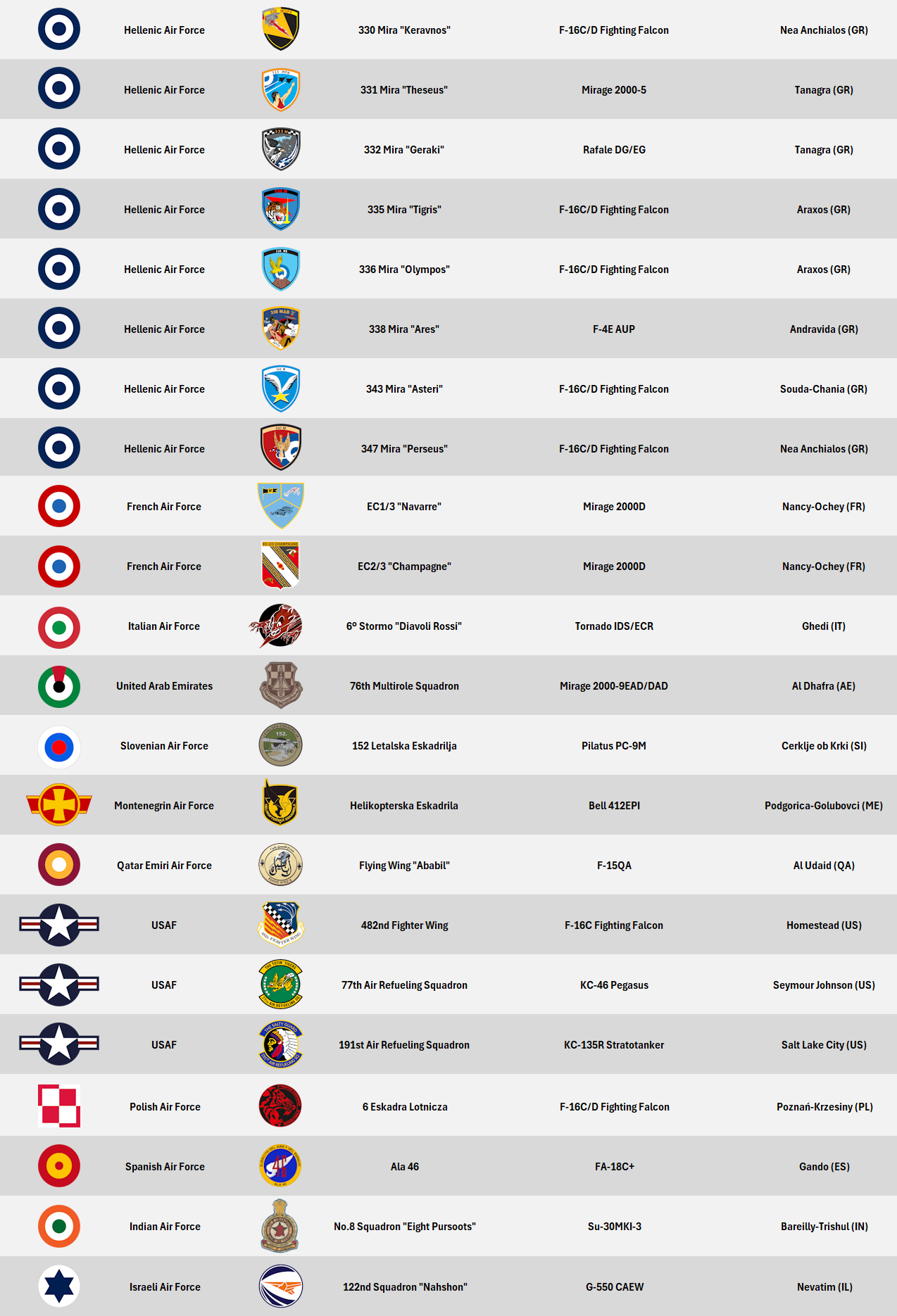
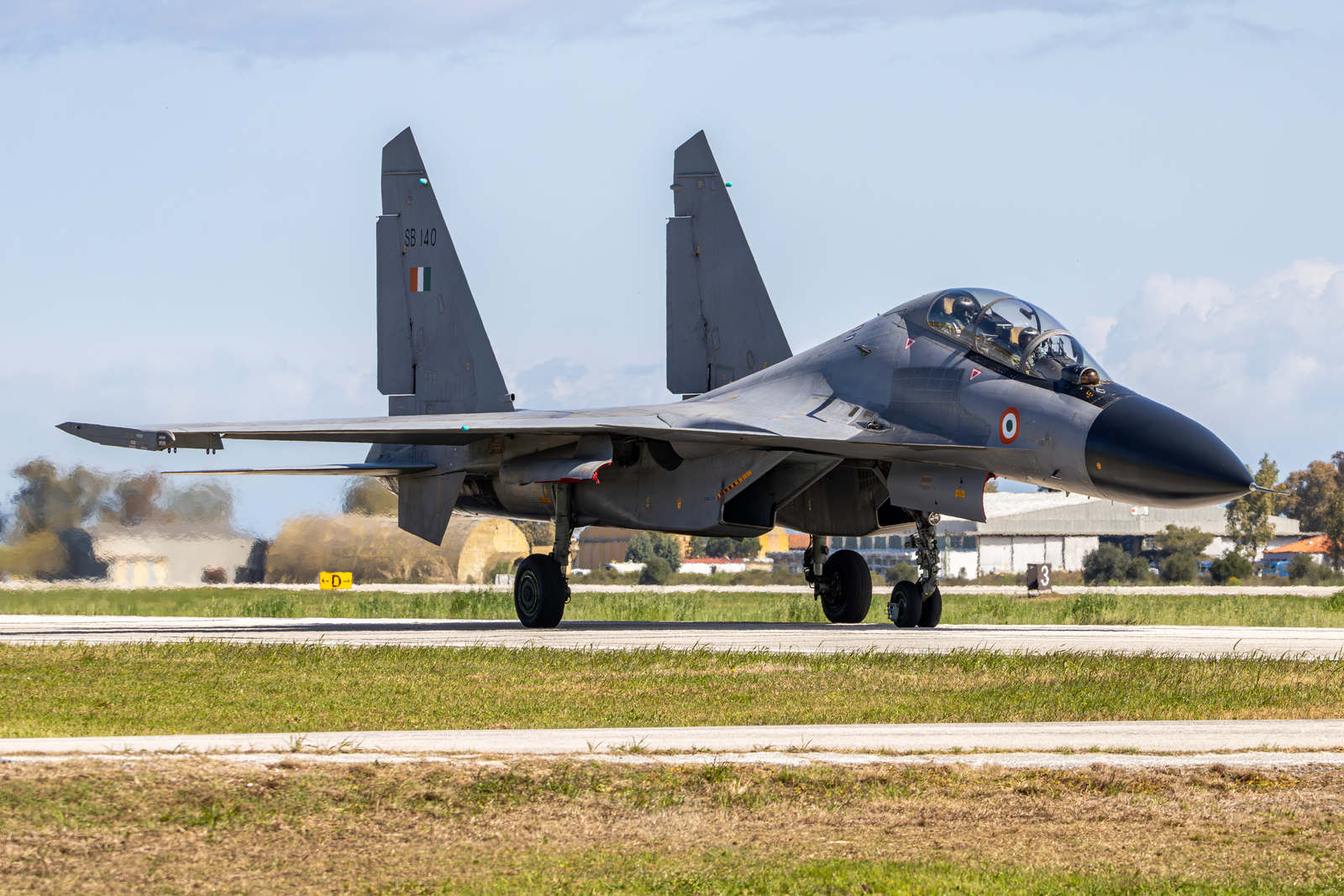
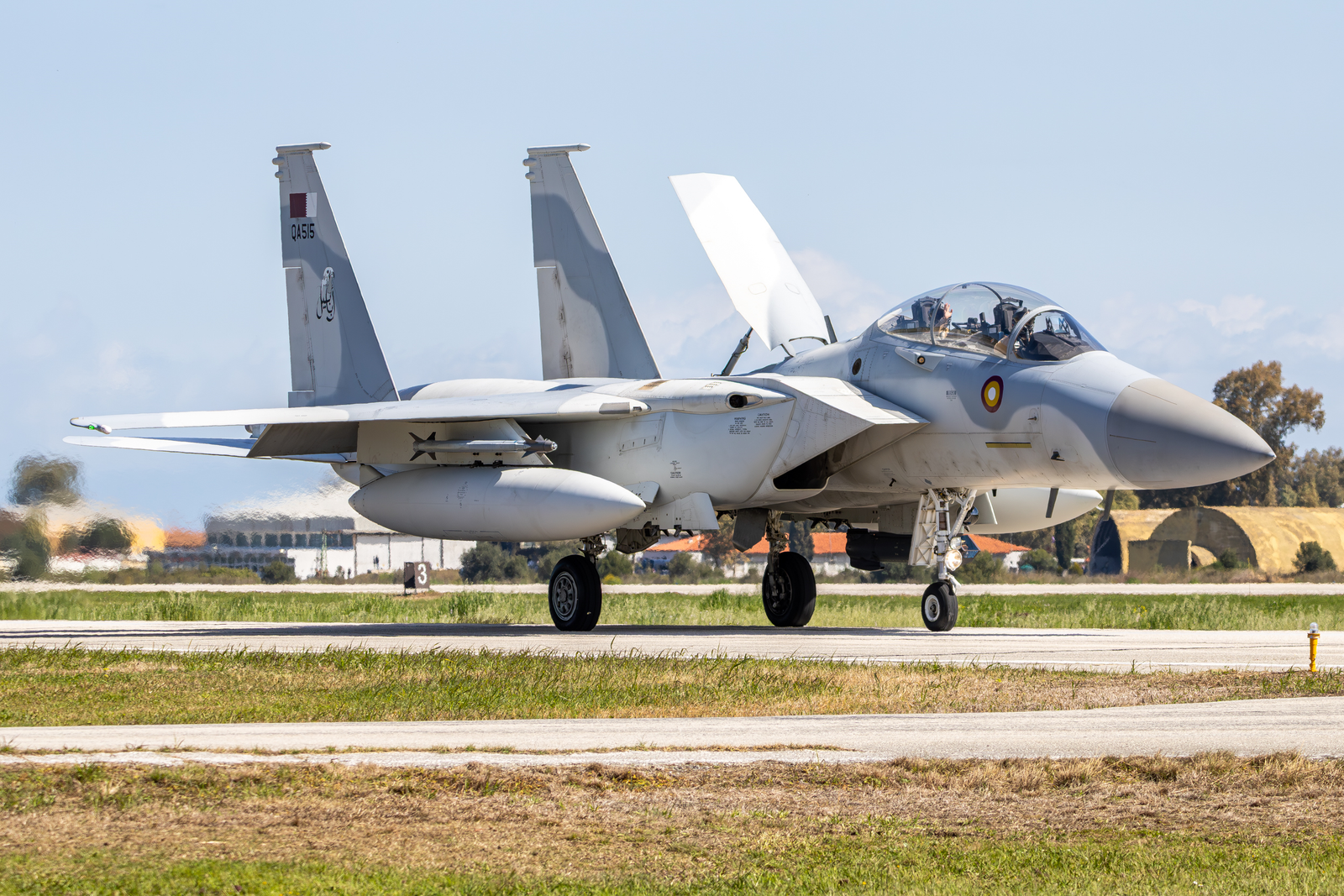
In 2024 and even more so in 2025, Iniochos reached its full potential. Participation hit a record high with 12 active nations (India, Qatar, UAE, USA, Poland, Italy, France, Slovenia, Spain, Montenegro, Israel, and Greece), and over 1,300 sorties were flown over an area covering the entire Athens FIR.
The integration of advanced simulators, the use of AEW&C platforms, and the involvement of naval forces and special units elevated Iniochos to be considered the Red Flag of the Mediterranean.
COMAO Missions
COMAO stands for Combined Air Operation, where different types of aircraft with different roles operate together in the same timeframe and airspace. It is the most complex type of air mission.
During Iniochos, a single COMAO may involve:
- 20–40 aircraft (fighters, tankers, AEW&C, electronic support);
- Simultaneous missions against multiple targets;
- Scenarios simulating a full-scale war theatre.
A typical COMAO scenario during Iniochos might include:
- AWACS and ISR platforms airborne: monitoring air traffic and identifying threats.
- F-16s and Mirages in a “sweep” role: flying ahead to clear the area of enemy fighters.
- Tornado ECR or Rafale with SEAD capabilities: neutralizing enemy radars and SAMs with simulated HARM missiles.
- Strike package (Su-30, F-15, Tornado IDS): entering to hit enemy infrastructure (bridges, depots, installations).
- KC-135, IL-78, or KC-46: refueling the group in flight.
- CSAR teams (helicopters or fixed-wing): on standby to recover a simulated “downed pilot.”
Electronic Warfare assets: jamming enemy radars and communications.
Participants
As previously mentioned, the 2025 edition was one of the largest ever held, with 12 participating nations, each contributing different types of aircraft and assets:
Spotters Day
One of our members was lucky enough to attend the Spotter Day held at the base on April 7th.
The day began very early, by 6:00 AM many spotters were already lined up, waiting to enter the base. Entry started around 7:30 AM.
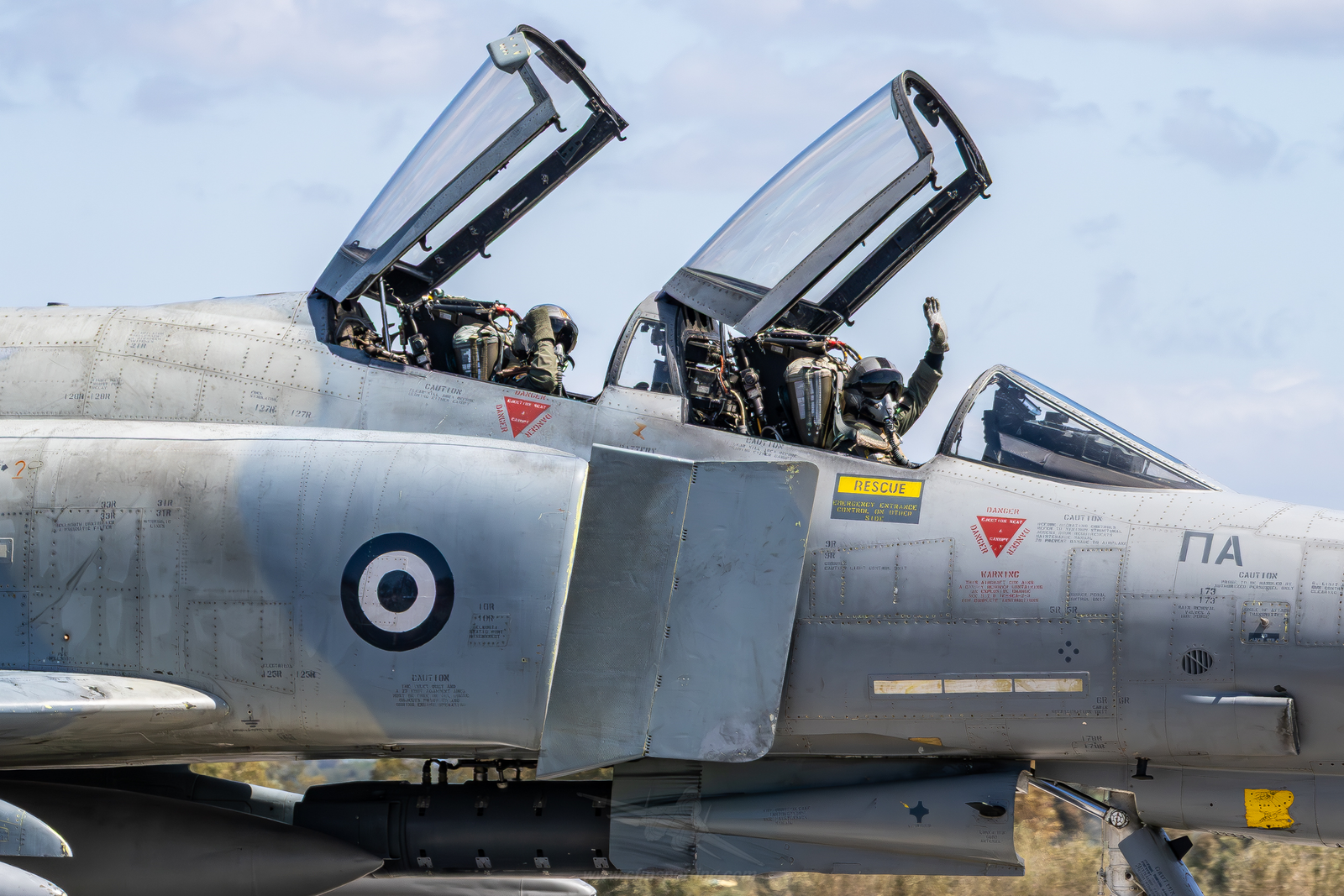
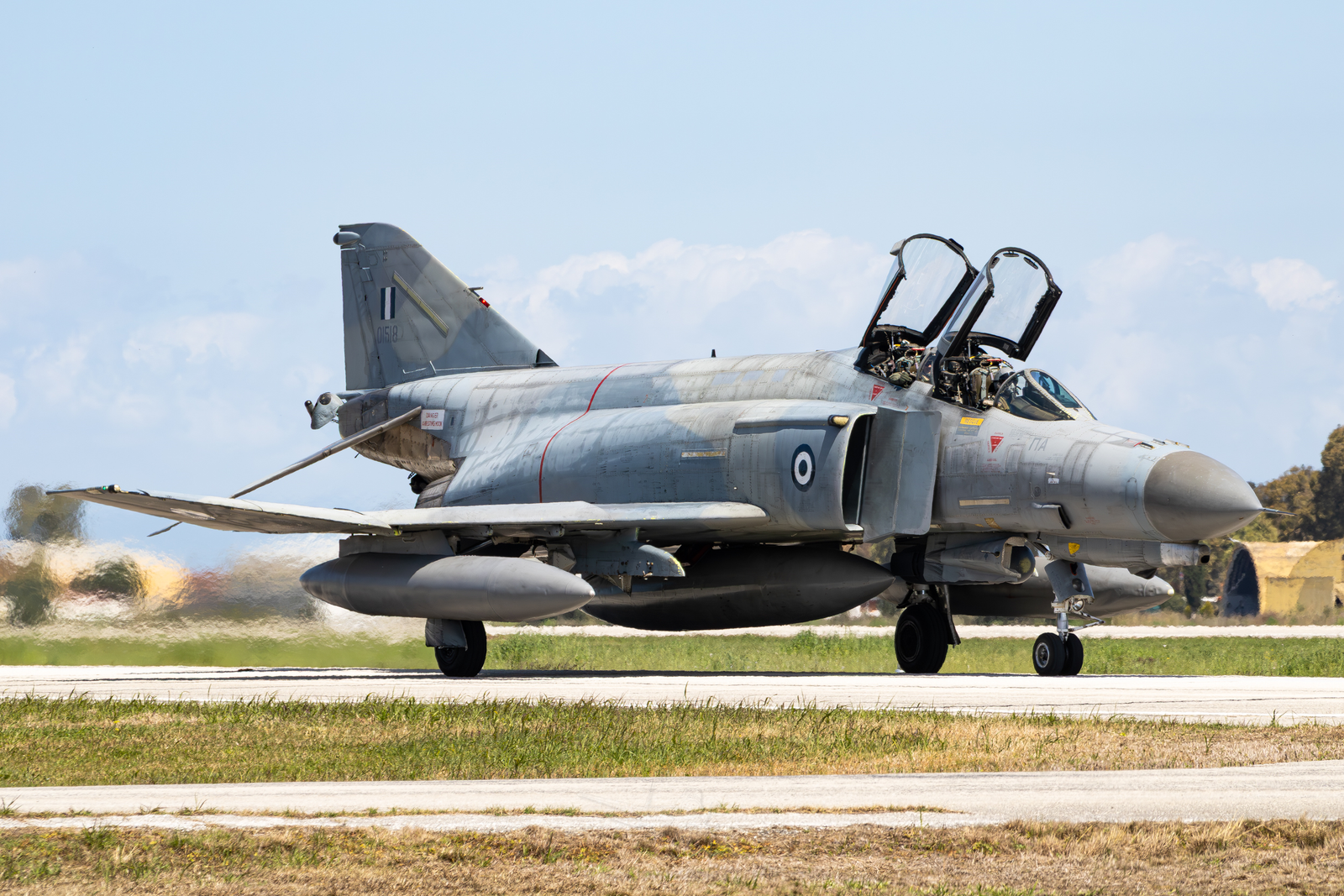
By 9:00 AM, nearly all the spotters had taken up their positions, ready to participate in a very intense day of training. Shortly after, two HAF F-4Es took off and delighted everyone with a series of demo maneuvers, including a wing wave just for the spotters.
The first sorties began around 11:00 AM, with aircraft landing from about 12:30 PM onward. The afternoon wave began later than expected, at around 4:30 PM, with recoveries starting from 6:00 PM.
Unfortunately, all the aircraft flying in the morning were photographed backlit, since the spotters had been placed in front of the control tower, a zone that is in backlight during morning hours. But the afternoon sorties benefited from spectacular lighting, as the day was clear and sunny.
Wrap-Up
Apart from the less-than-ideal photography spot in the morning during the Spotters Day, Iniochos 2025 was definitely a blast.
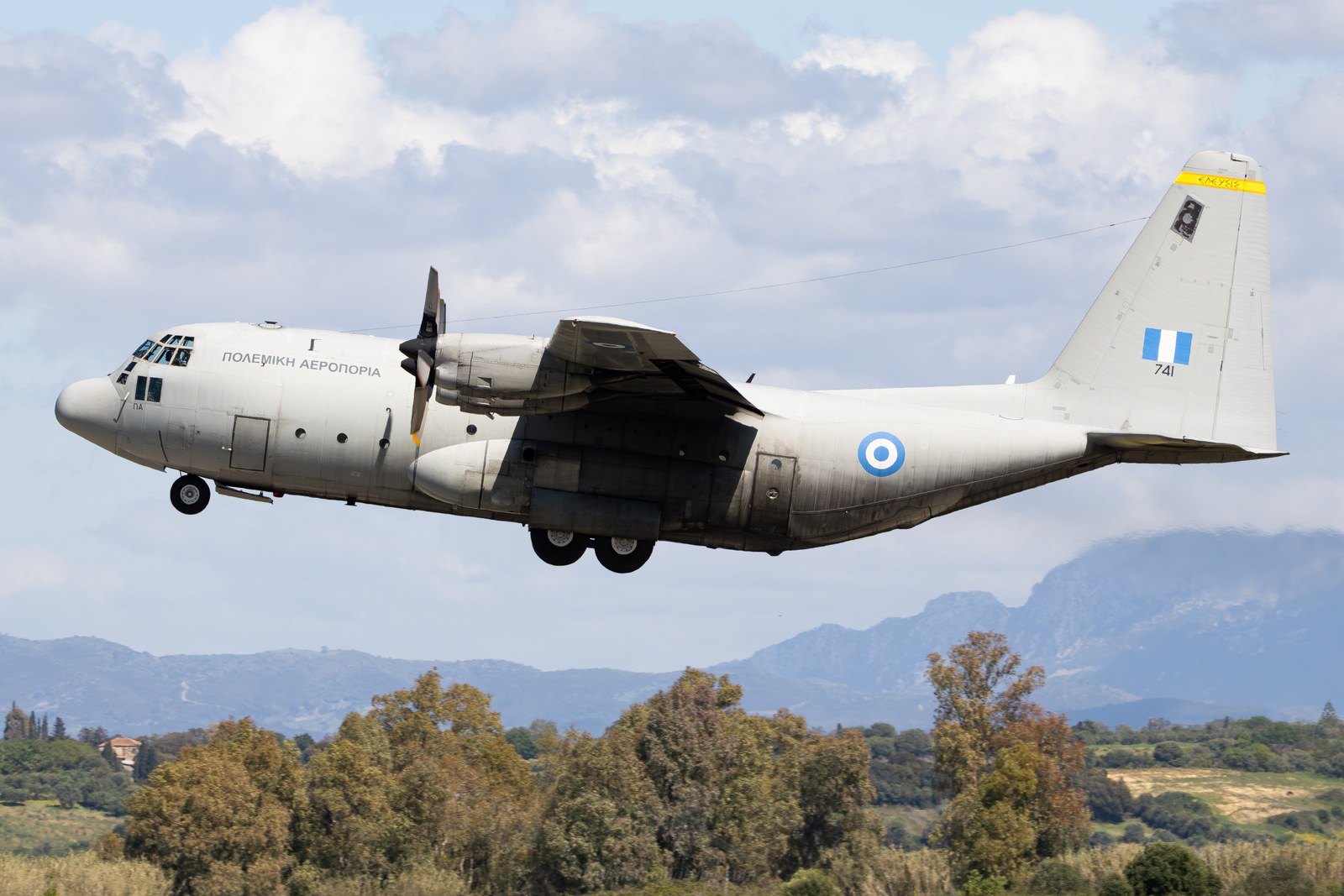
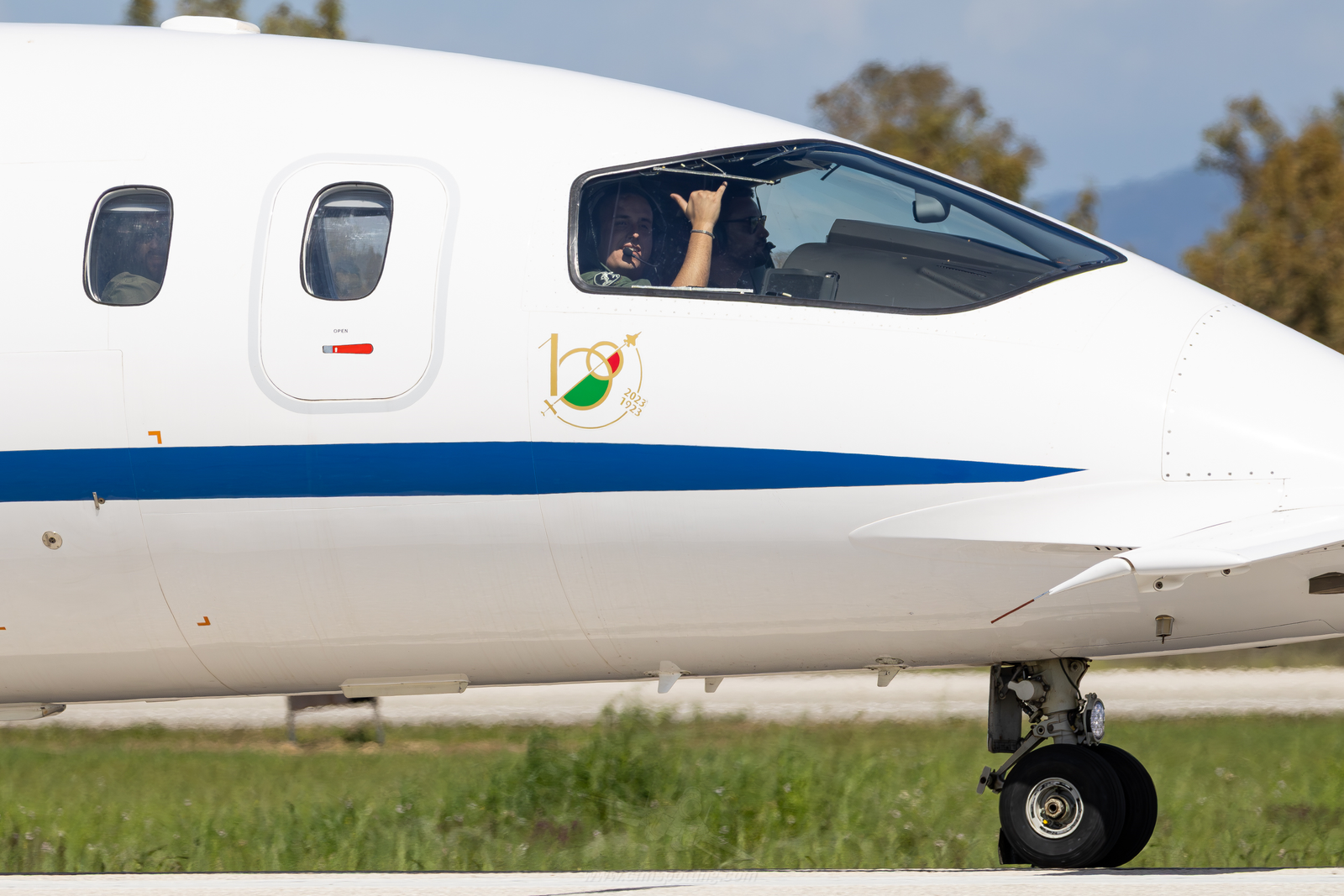
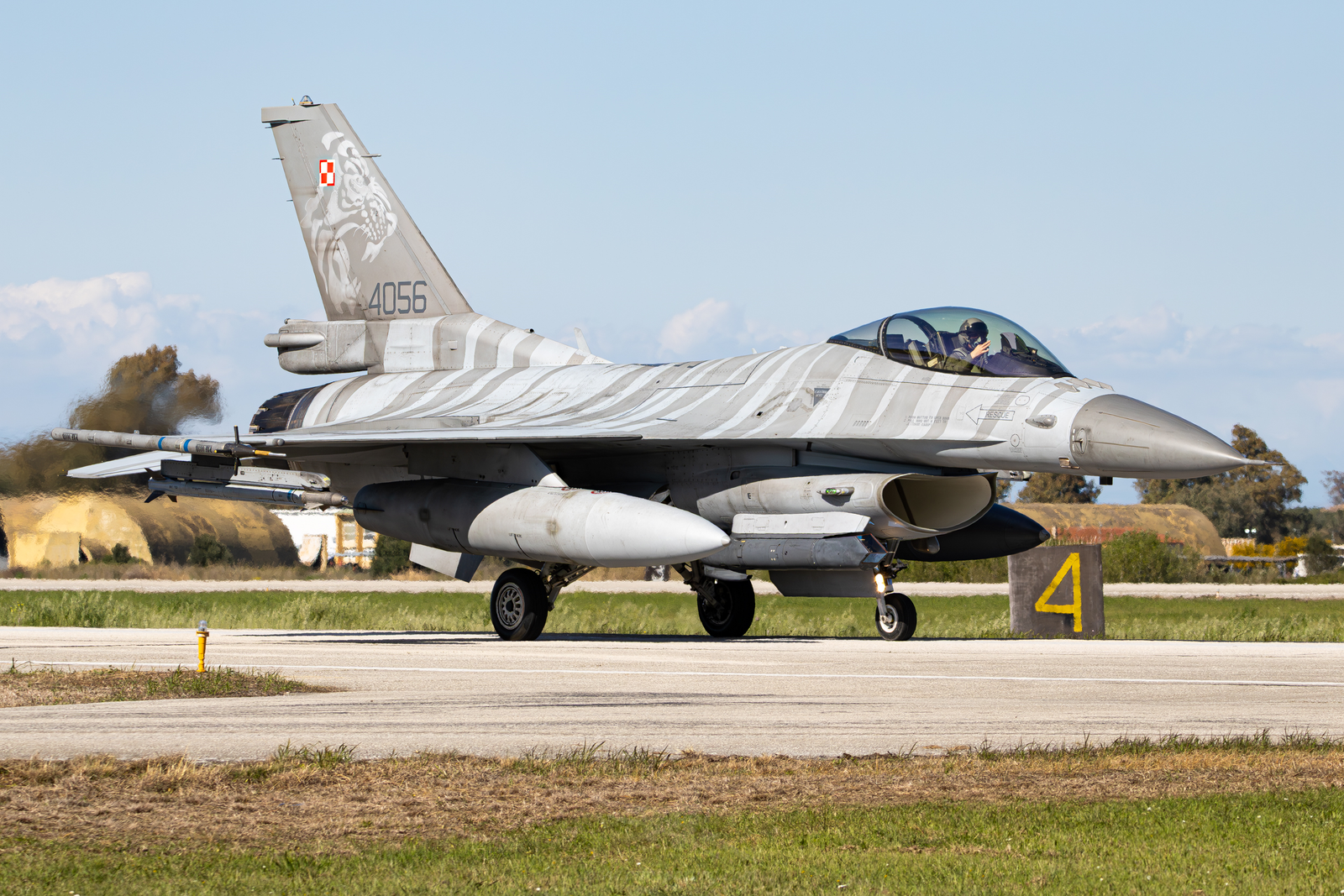
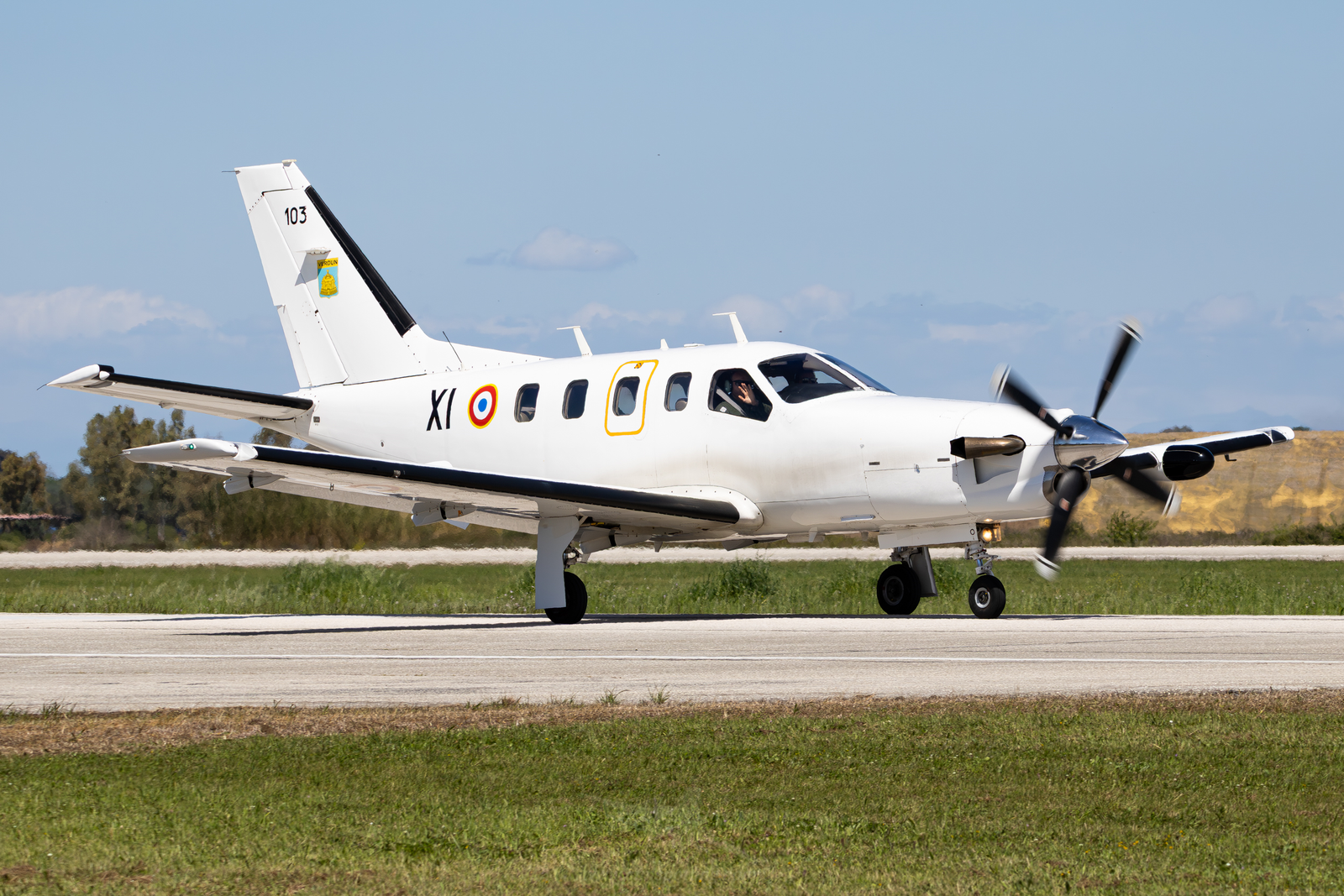
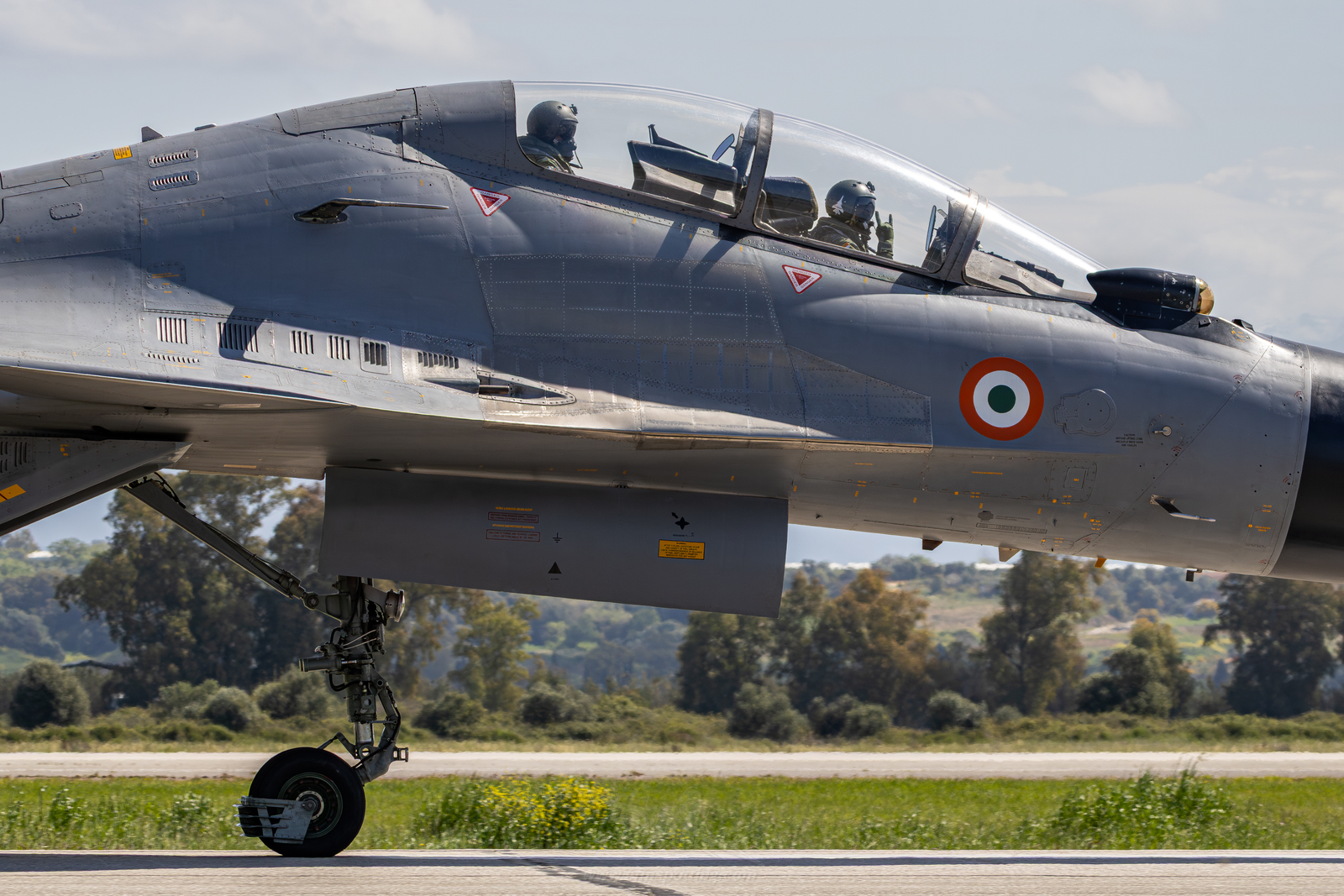
Attached below is a gallery showcasing the various aircraft that took part in this year’s exercise.
See you soon, and ευχαριστώ for taking the time to read our article!
Gallery
Article by Diego Mor – Pictures by Diego Mor.