

50th Tornado Anniversary - Ghedi
History of the Panavia Tornado
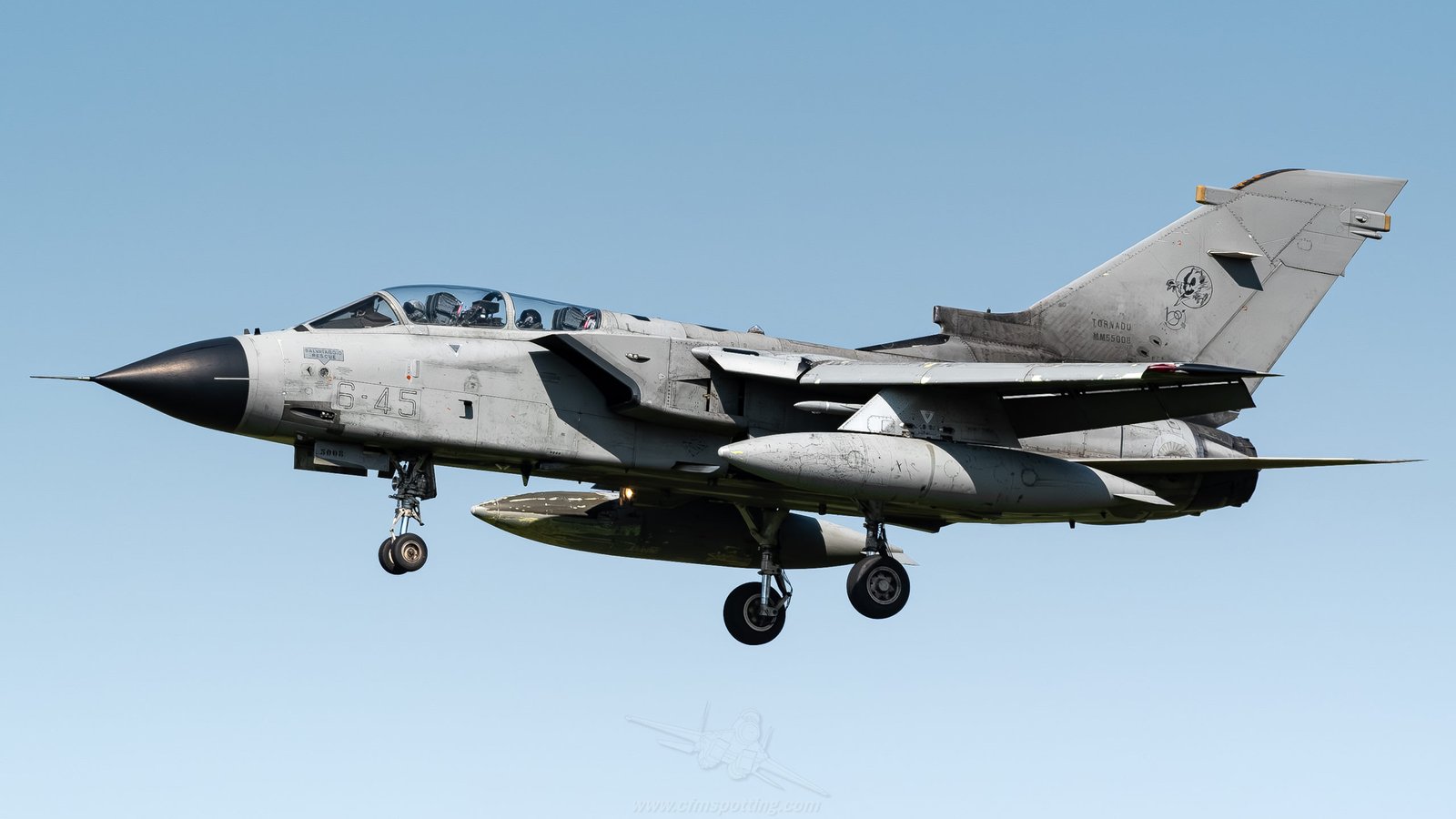
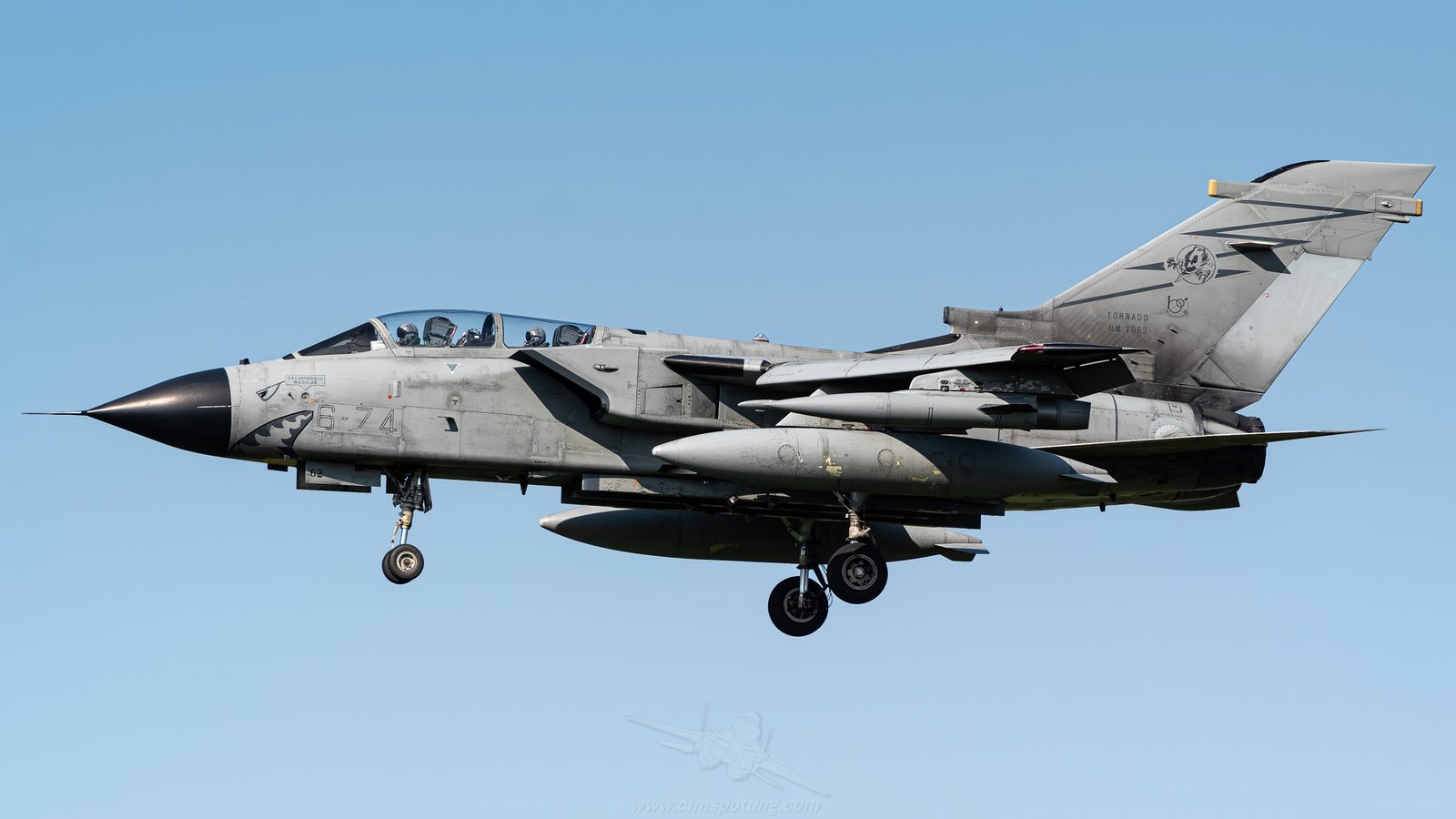
The Panavia Tornado (aka “Tonka” between aviation enthusiasts) is one of the most iconic European fighter-bomber, developed through a tripartite collaboration between the United Kingdom, Germany, and Italy under the Panavia Aircraft GmbH consortium. Born out of a need in the late 1960s for a multirole aircraft capable of replacing multiple aging fleets in NATO air forces, the Tornado was engineered to be a low-level, high-speed strike platform capable of penetrating dense enemy air defenses.
The Tonka’s most notable feature is its variable-sweep wing design, allowing the aircraft to adapt its wing configuration for various mission types: swept forward for slower speed and takeoff/landing stability, and fully swept back for supersonic speeds. This design gave the Tornado excellent handling at low altitude, perfect for flying under enemy territory, avoiding radar detection.
The Tornado was developed in three primary variants:
Tornado IDS (Interdictor/Strike): the standard ground-attack version used by Germany, Italy, Saudi Arabia, and the UK.
Tornado ECR (Electronic Combat/Reconnaissance): used by Germany and Italy for SEAD missions, equipped with anti-radiation missiles and EW systems.
Tornado ADV (Air Defence Variant): developed by the UK, but also used by Italy and Saudi Arabia for long-range interception, equipped with a longer fuselage, radar enhancements, and air-to-air missiles.
The Tonka saw its first major operations during Operation Desert Storm in 1991, where it performed low-altitude attacks on heavily defended Iraqi targets. Although several aircraft were lost early in the campaign, lessons were quickly learned, and tactics adjusted.
The Tornado later took part in NATO operations over Bosnia and Kosovo, the 2003 Iraq invasion, Afghanistan, and the 2011 Libyan intervention. Its long endurance, terrain-following radar, and ability to deliver a wide range of ordnance made it a favorite for long-duration strike and reconnaissance missions.
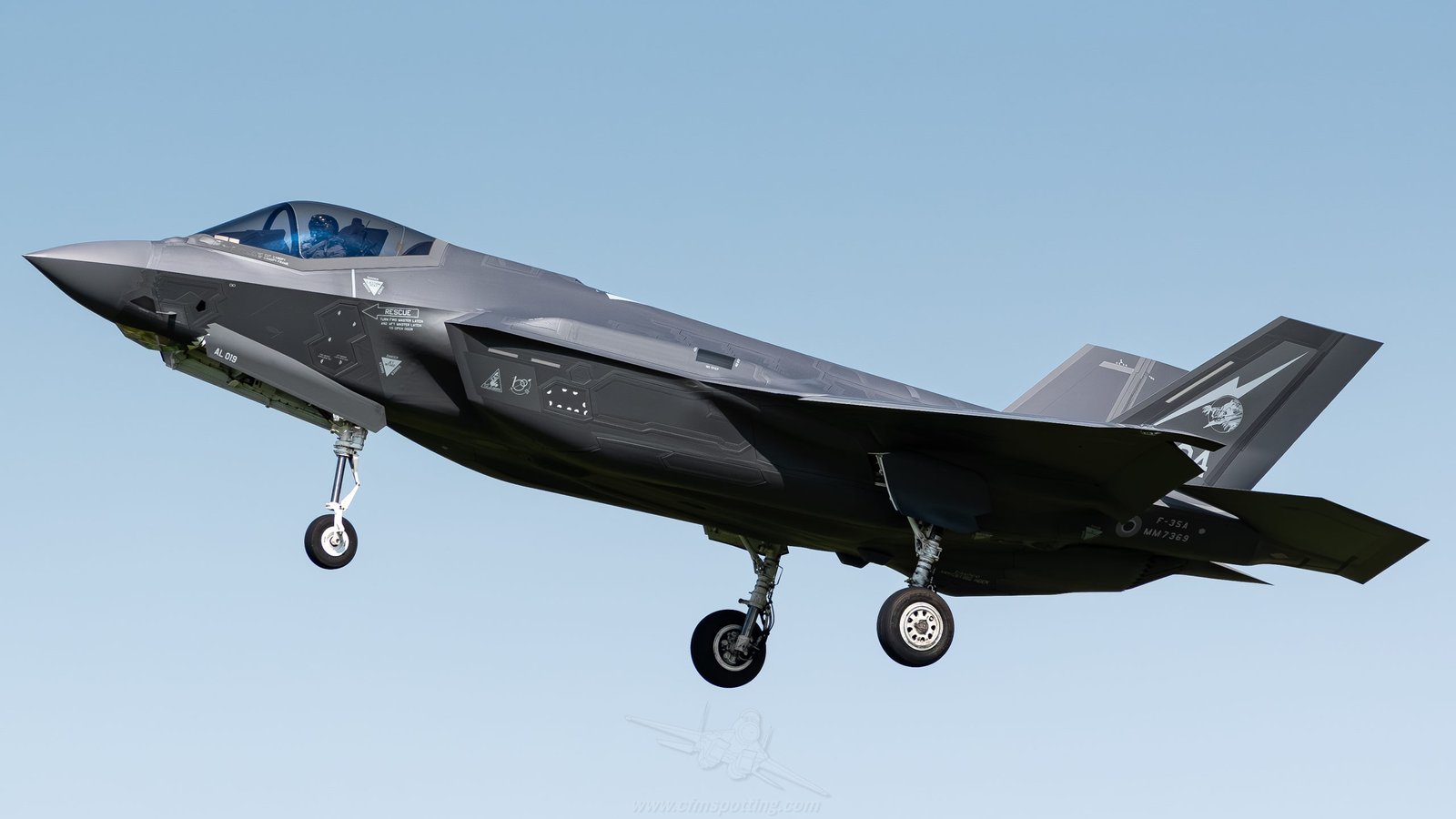
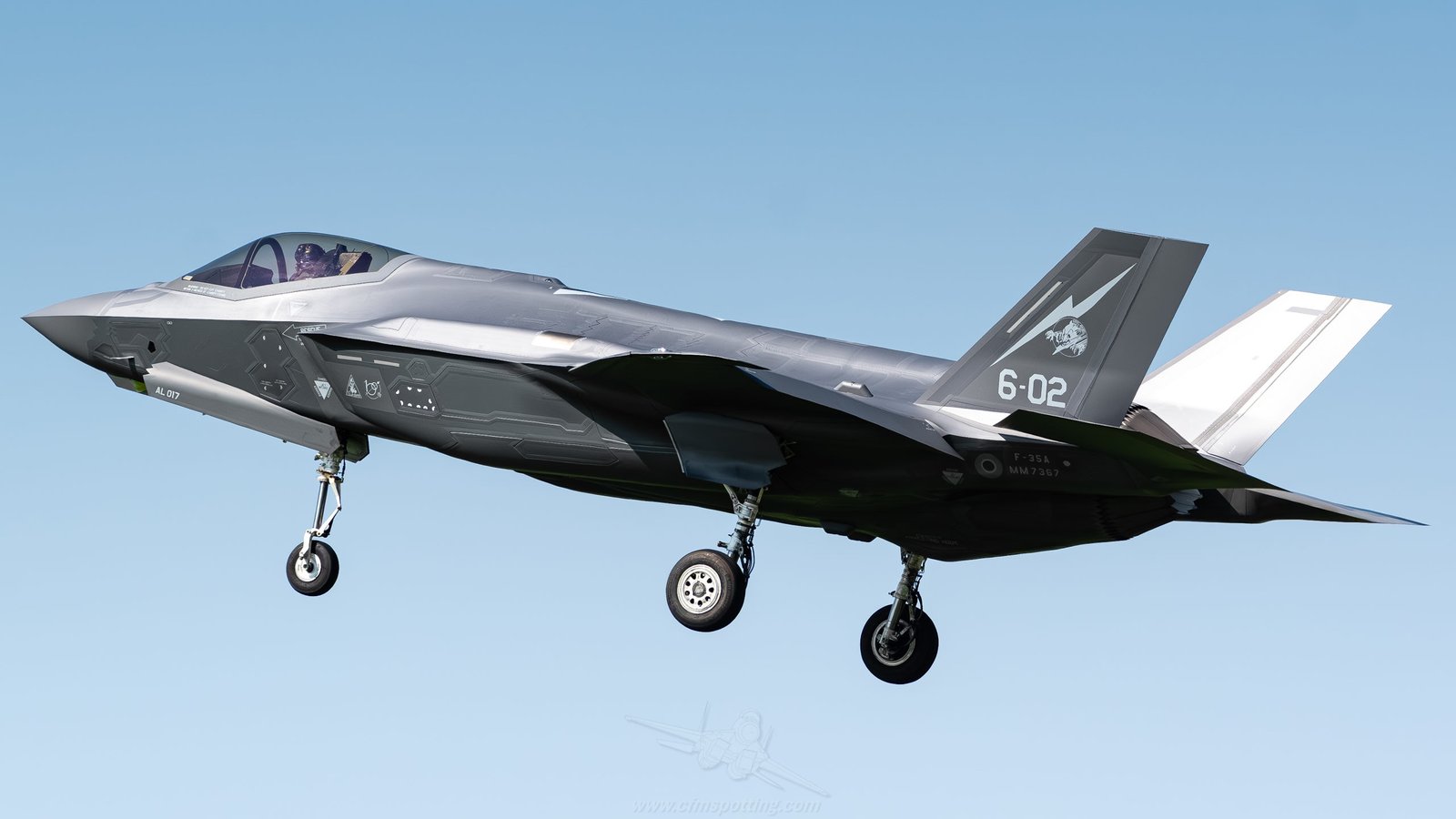
Despite its reputation as a “reliable workhorse”, the Tornado is nearing the end of its operational life. The Royal Air Force sadly retired its fleet in 2019, marking the closure of an era. Germany and Italy remain the last European operators, with Germany planning to retire the Tornado fleet by 2030, replacing it with a mix of Eurofighter Typhoons and F-35A Lightning aircraft to fulfill the NATO nuclear sharing mission.
Italy too, is gradually phasing out its Tornados, as it continues deliveries of the F-35, both A and B variants. However, due to delays in procurement and integration, the Tornado remains in service for now, especially the ECR variant, which still plays a vital role in EW missions.
Saudi Arabia, which operates a fleet of 81 Tornados, has also begun to shift toward newer platforms like the Typhoon.
Although retirement is inevitable, the Tornado’s engineering legacy continues to shape modern aircraft design, and its combat-proven performance stands as a testament to decades of European aerospace cooperation. Museums, airbases, and aviation enthusiasts across the continent are working to preserve Tornado airframes in static displays and commemorations, ensuring that this distinctive swing-wing jet will not be forgotten.
Tornado: Service in the Italian Air Force
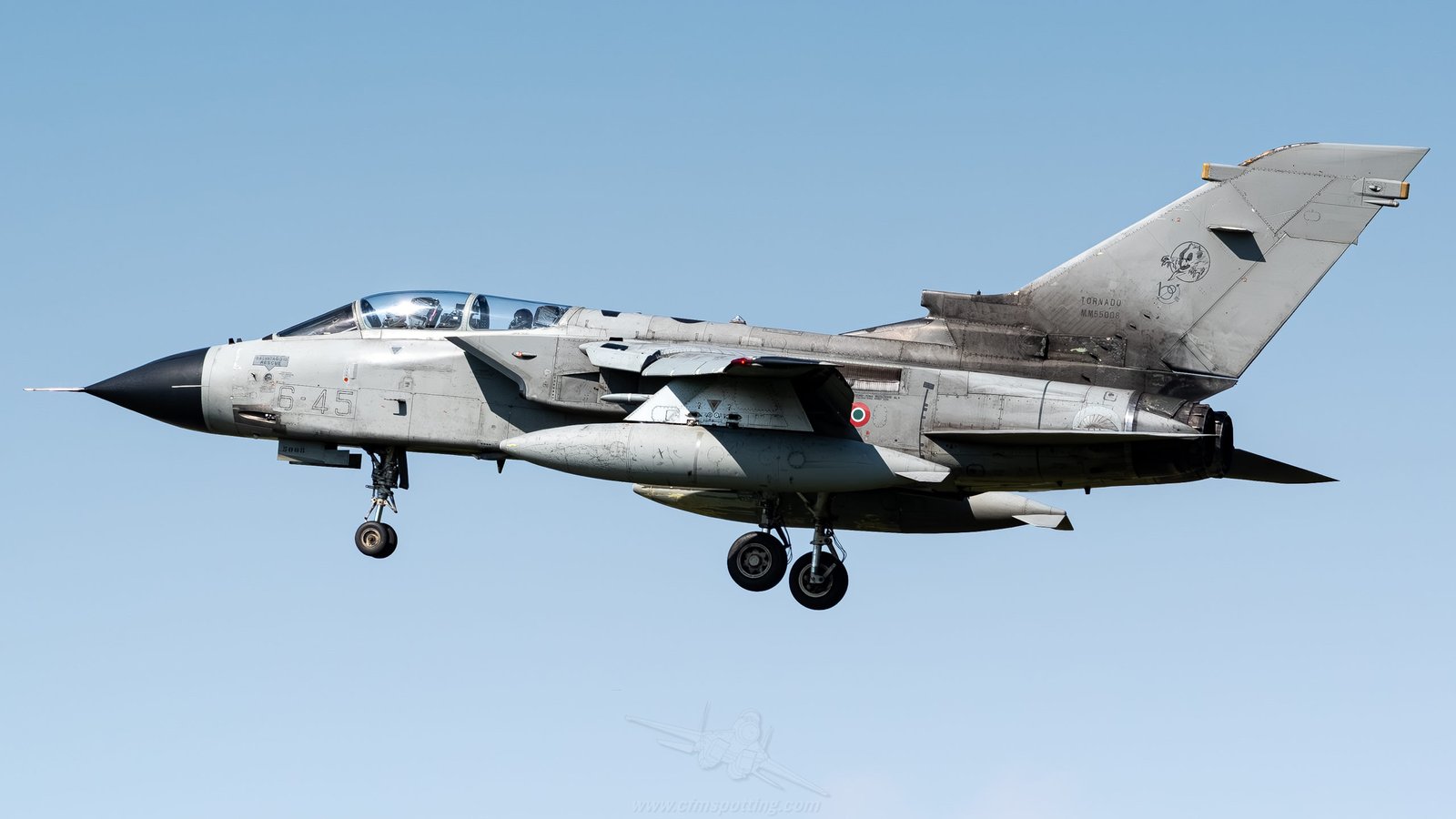
The Italian Air Force (Aeronautica Militare) has been a key operator of the Panavia Tornado since the early 1980s, playing a major role in its development and operational deployment. Italy ordered the aircraft as part of the original tri-national Panavia agreement, receiving a total of 100 Tornado IDSs, followed by 15 ECRs. Additionally, Italy operated 24 Tornado ADVs, leased from the RAF in the mid-1990s. This version was introduced to temporarily enhance national air defense capabilities until the Eurofighter Typhoon became operational.
During its operational life, the Tornado was based at the following bases:
Ghedi AFB, Brescia: home to the 6° Stormo, the main core hub for Italian Tornado IDS and ECR operations.
Piacenza-San Damiano AFB, Piacenza: home to the 50º Stormo.
Gioia del Colle AFB, Bari: home to the 36º Stormo.
- Cameri AFB, Novara: home to the 53º Stormo.
At its peak, several squadrons were dedicated to Tornado operations:
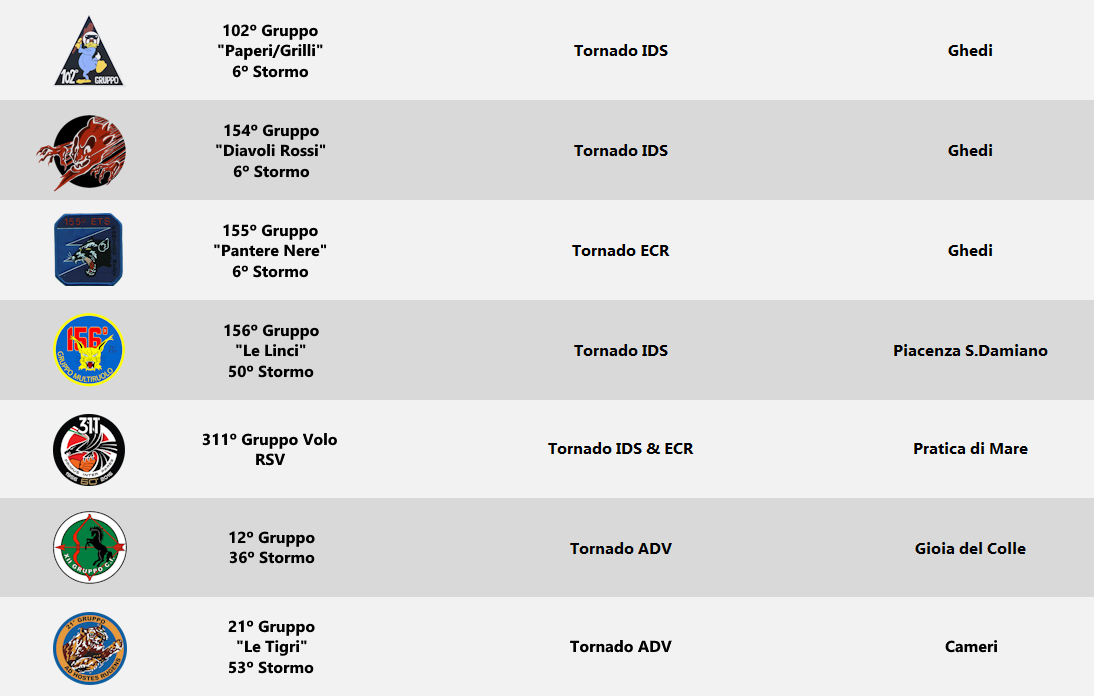
102º Gruppo “Paperi/Grilli” (6º Stormo): operated IDS aircraft for strike missions; disbanded in 2001.
154º Gruppo “Diavoli Rossi” (6º Stormo): one of the longest-serving units flying the IDS variant, used for conventional and nuclear-capable strike roles. Aircraft from this group still fly today, under the callsign “Freccia”.
155º Gruppo “Pantere Nere” (6º Stormo): specialist in the ECR variant, focusing on SEAD and EW. Still active today, flying under the callsign “Pante”.
156º Gruppo “Le Linci” (50º Stormo): operated IDS aircraft from Piacenza; deactivated in the 2010s.
311º Gruppo Volo (Reparto Sperimentale Volo): uses Tonkas for testing and evaluation, mainly out of Pratica di Mare AFB, Rome.
- 21º Gruppo (53º Stormo): First ADV Operator. The squadron conducted daily QRA exercises, later sent all of their ADVs to Gioia del Colle.
- 12º Gruppo (36º Stormo): Second ADV operator. Stationed at Gioia del Colle, this unit conducted air policing, QRA, and long-range interception missions. The aircraft were returned to the RAF by 2004, marking the end of ADV service.
40 years of service for the Aeronautica Militare
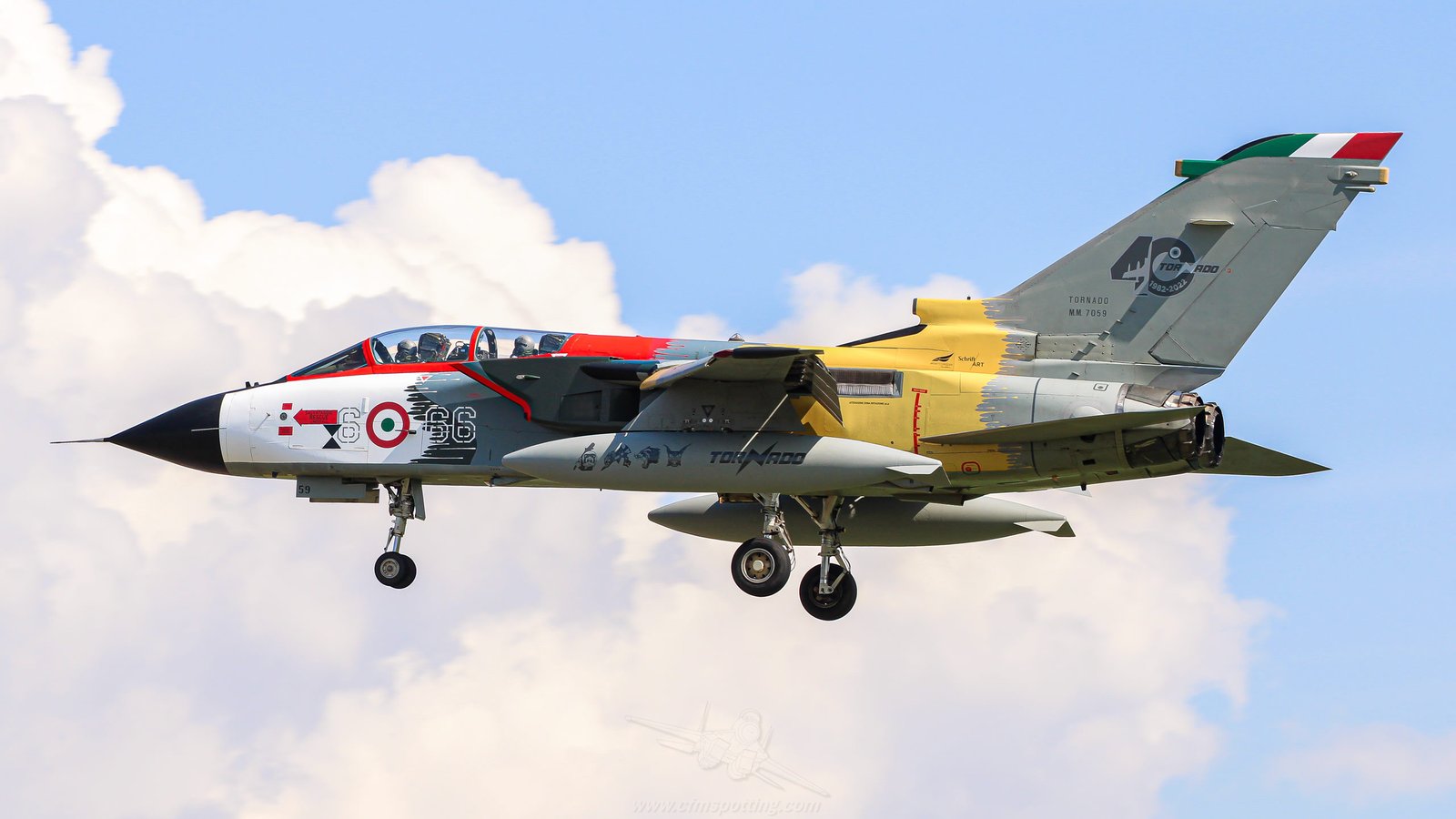
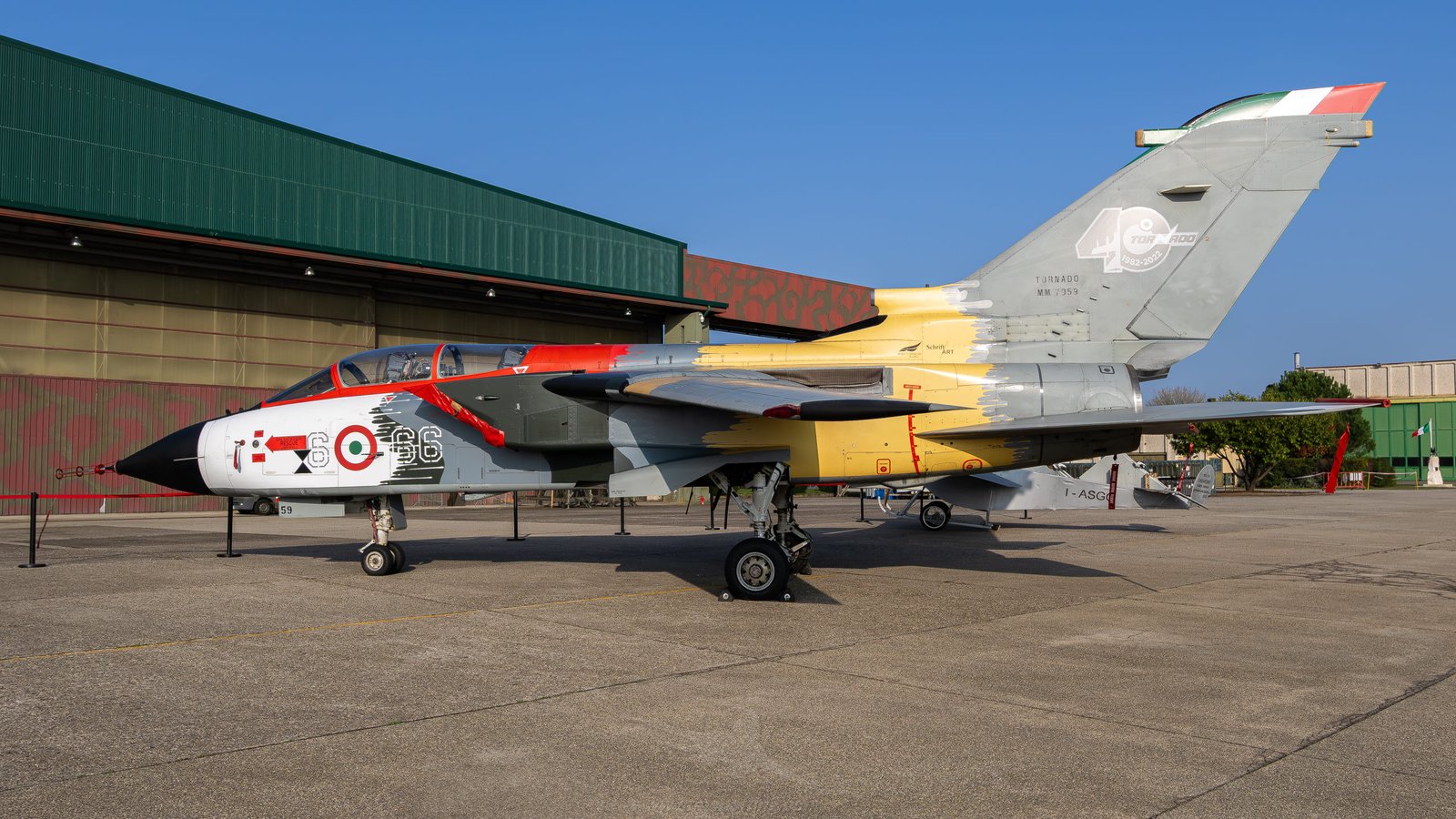
In 2022, the Italian Air Force proudly celebrated the 40th anniversary of the Tornado’s service within its fleet. To mark this important milestone, a special commemorative livery was applied to MM7059, an IDS from the 154º Gruppo based at Ghedi Air Base. The aircraft was painted in a stunning retro-style camouflage scheme reminiscent of its early Cold War years, with anniversary markings and squadron insignia highlighting its rich operational history.
Celebrating 50 years of the mighty Tonka
Two years later, in 2024, another significant anniversary was honored: the 50th anniversary of the Tornado’s first flight, which originally took place on 14 August 1974, but more on that later.
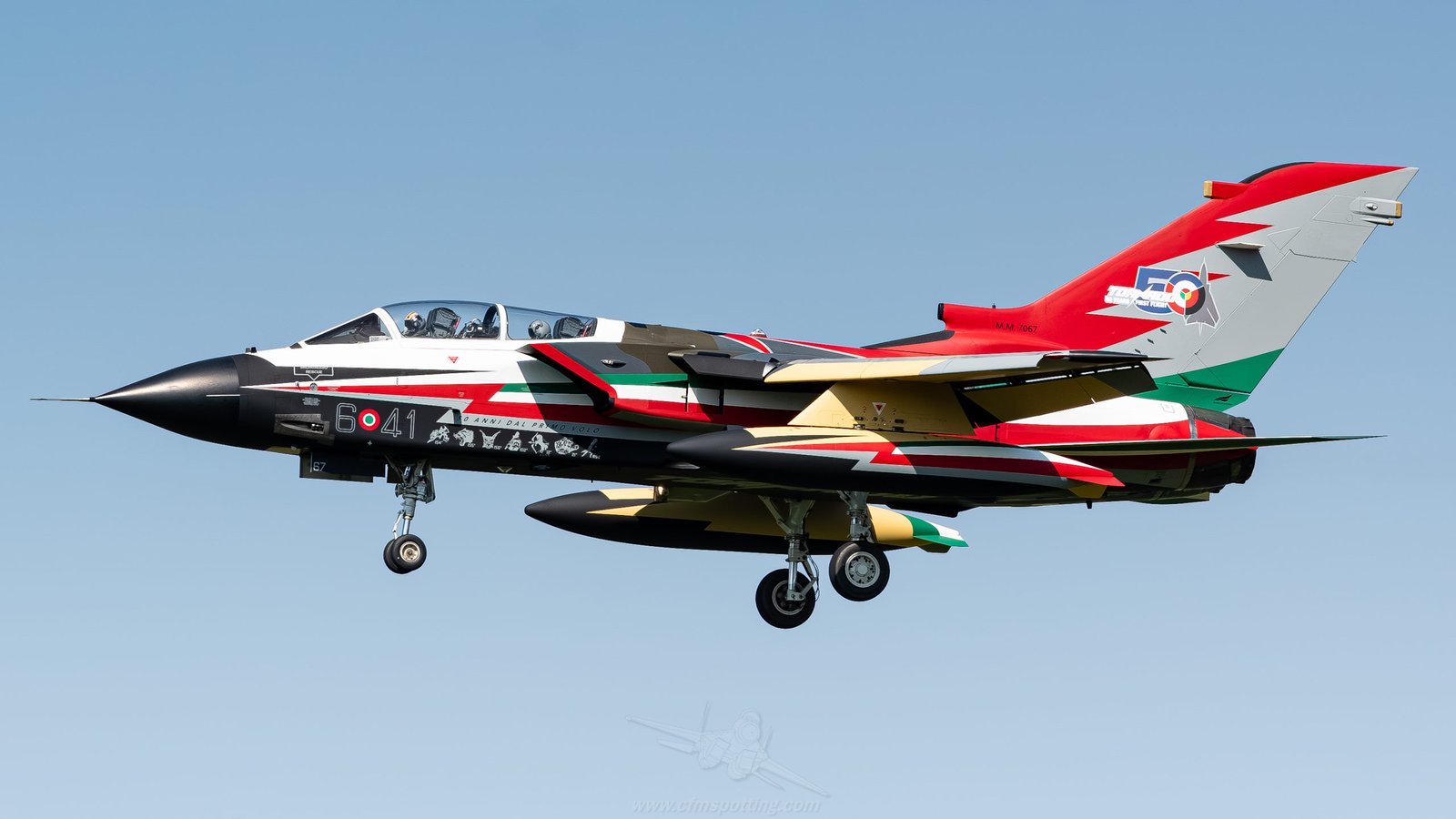
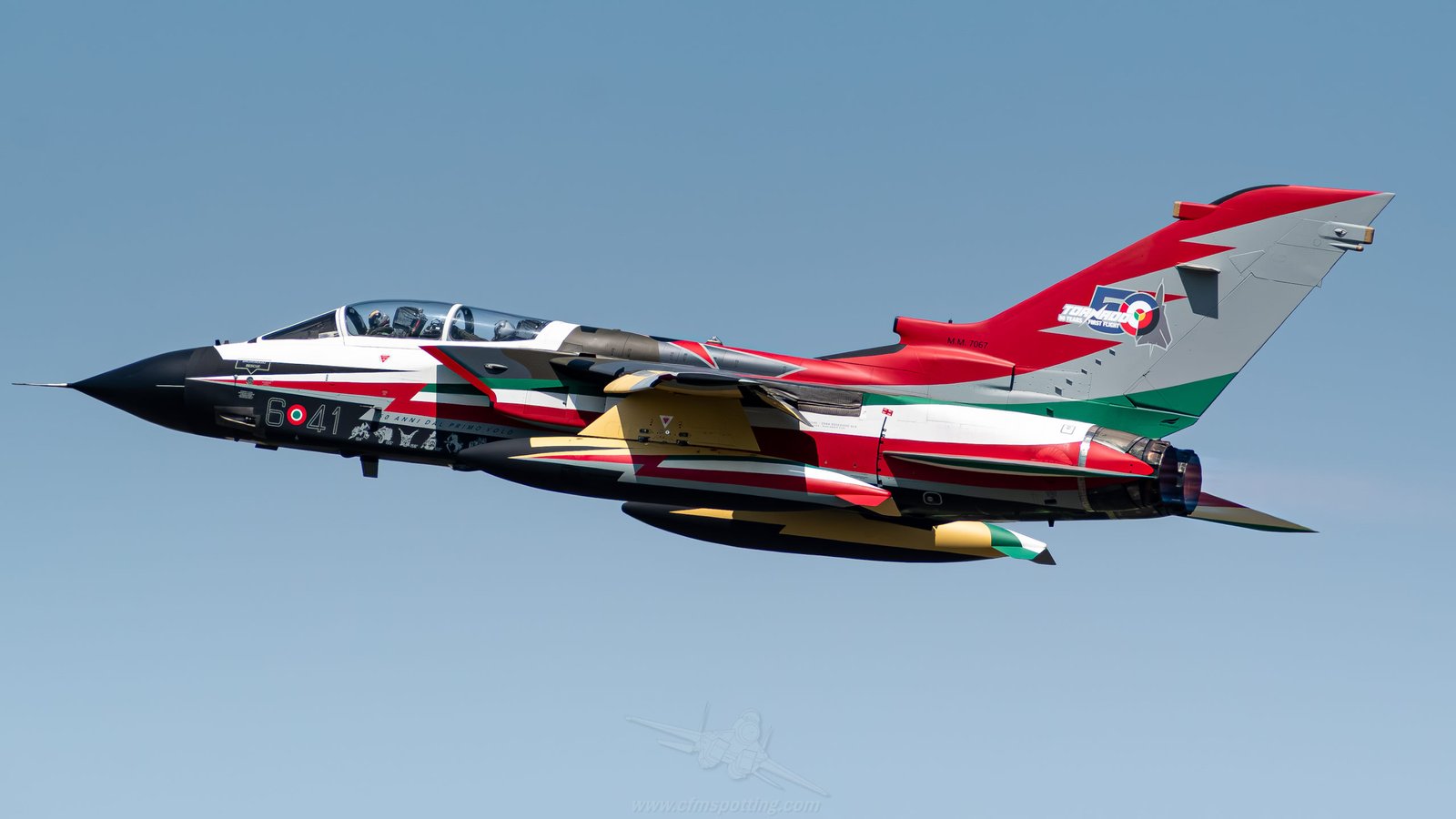
To commemorate this international milestone, the Italian Air Force unveiled another eye-catching paint scheme on MM7067 and MM7051, two IDSs based out of Ghedi. This livery featured bold graphics celebrating half a century of the Tornado, incorporating Panavia branding, the aircraft’s silhouette, the insignias of the operational squadrons throughout its service, and the flags of the partner nations Italy, Germany, and the United Kingdom, who co-developed the jet. The design was not only a tribute to the aircraft’s legacy but also a symbol of successful European defense collaboration.
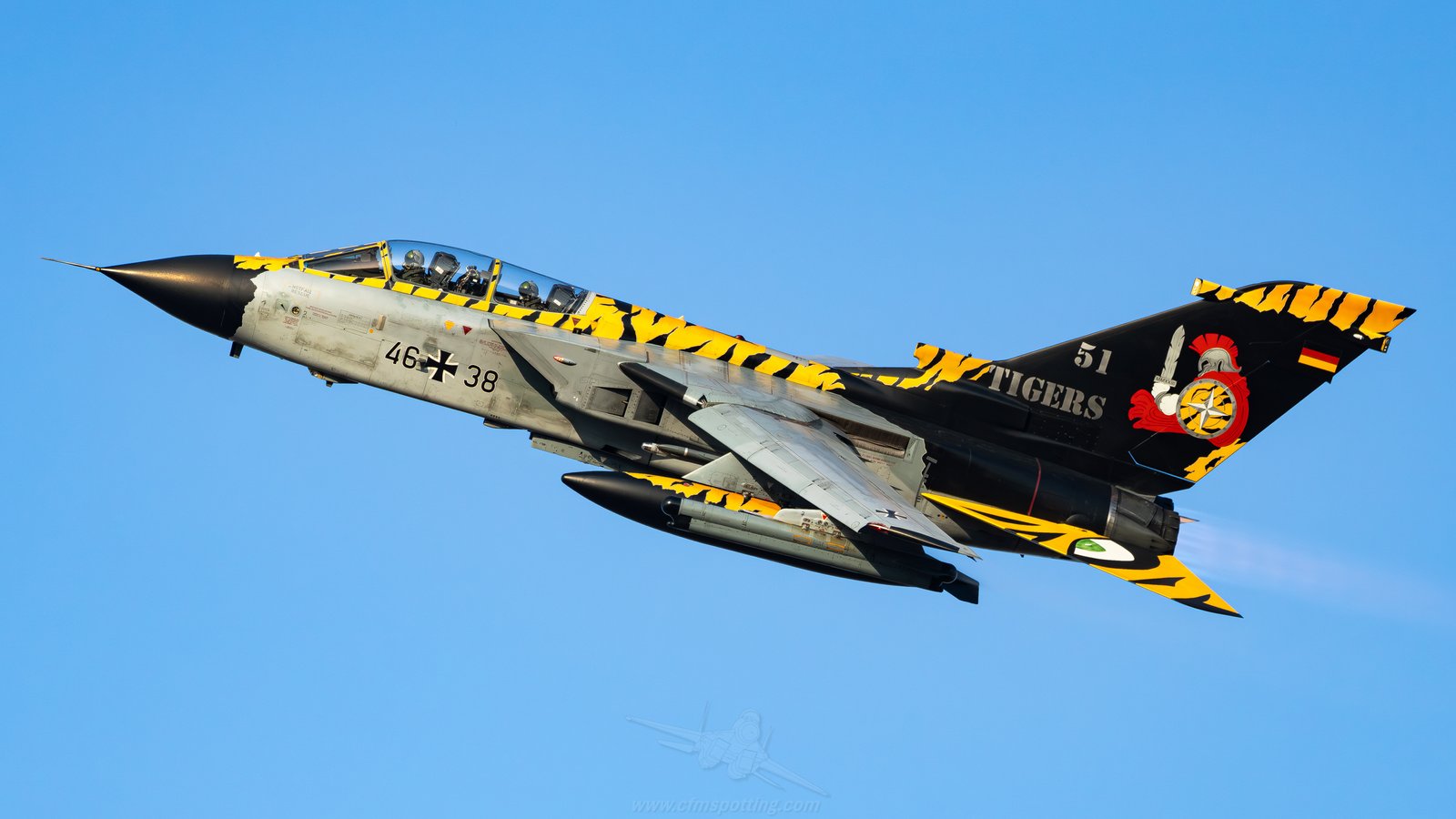
Germany also took part in the 50th anniversary celebrations, unveiling two different liveries. One of them was painted on 43+92, an IDS from TaktLwg51 “Immelmann”, based out of Schleswig: taking inspiration from the prototype livery, the germans also chose to apply the flags of the Tripartite Collaboration between the UK, Germany and Italy. Apart from that, the livery also featured a striking splinter camo, and the date of the first flight. The second livery was applied to 43+97, an IDS from WTD61 in Manching.
These anniversary celebrations served not only as a nostalgic look back at the aircraft’s achievements but also as a well-deserved farewell, as the Tornado nears the end of its operational life.
The first flight, 50 years ago
The Panavia Tornado took to the skies for the very first time on August 14, 1974, marking the birth of one of the most successful multinational military aircraft projects in history. The aircraft, registered as P.01 and piloted by Paul Millett, lifted off from Manching Air Base in West Germany, under the watchful eyes of engineers and military officials from the three partner nations: Italy, Germany, and the United Kingdom.
This moment wasn’t just the maiden flight of a new combat aircraft, as it was the culmination of a bold political and industrial collaboration between nations that had differing military needs but a common vision: to create a versatile, supersonic, multirole aircraft that could replace aging fleets and perform in diverse scenarios, from low-level interdiction and strike missions to reconnaissance and electronic warfare.
The development of the Tornado was leaded by Panavia Aircraft GmbH, a joint venture formed in 1969, comprising British Aerospace (now BAE Systems), MBB (now part of Airbus), and Aeritalia (now part of Leonardo). The program was ambitious: the aircraft needed to be fast, flexible, and durable, with advanced avionics and a revolutionary swing-wing design to handle both high-speed dash and low-speed control. This allowed it to adapt to short runways and navigate challenging terrain at low altitude.
The first flight lasted just under 30 minutes, and it was a complete success. Despite being a prototype, P.01 demonstrated stable flight characteristics and validated the variable-geometry wing concept in real conditions. This paved the way for a robust flight testing campaign involving multiple prototypes, eventually leading to operational service by the late 1970s.
This maiden flight marked the beginning of an european industrial success story. Over 990 Tornados would be built in the following decades, serving with distinction in the Royal Air Force, German Air Force, Italian Air Force, and Royal Saudi Air Force.
Fifty years on, the first flight of the Tornado remains a historic milestone, not only for its technological achievements but also for the message it sent: European cooperation in defense manufacturing was not only possible, but capable of producing world-class results.
Gallery
Article by Christian Bossi – Pictures by Christian Bossi, Diego Mor.